

Championing the Local, part 3
SPEAKERS: (full bios below)
Andrew Williams, Local Programme Manager, Verture
Clare Cooper, Co-Founder & Co-Director, Bioregioning Tayside
Lizzie Williams, Regional Land Use Partnership (RLUP) manager, NW2045
McNabb Laurie, Manager, D&G Woodlands
Henry Leveson-Gower, Founder and CEO, Promoting Economic Pluralism
Anne Thomas, Trustee, Highland People’s Power
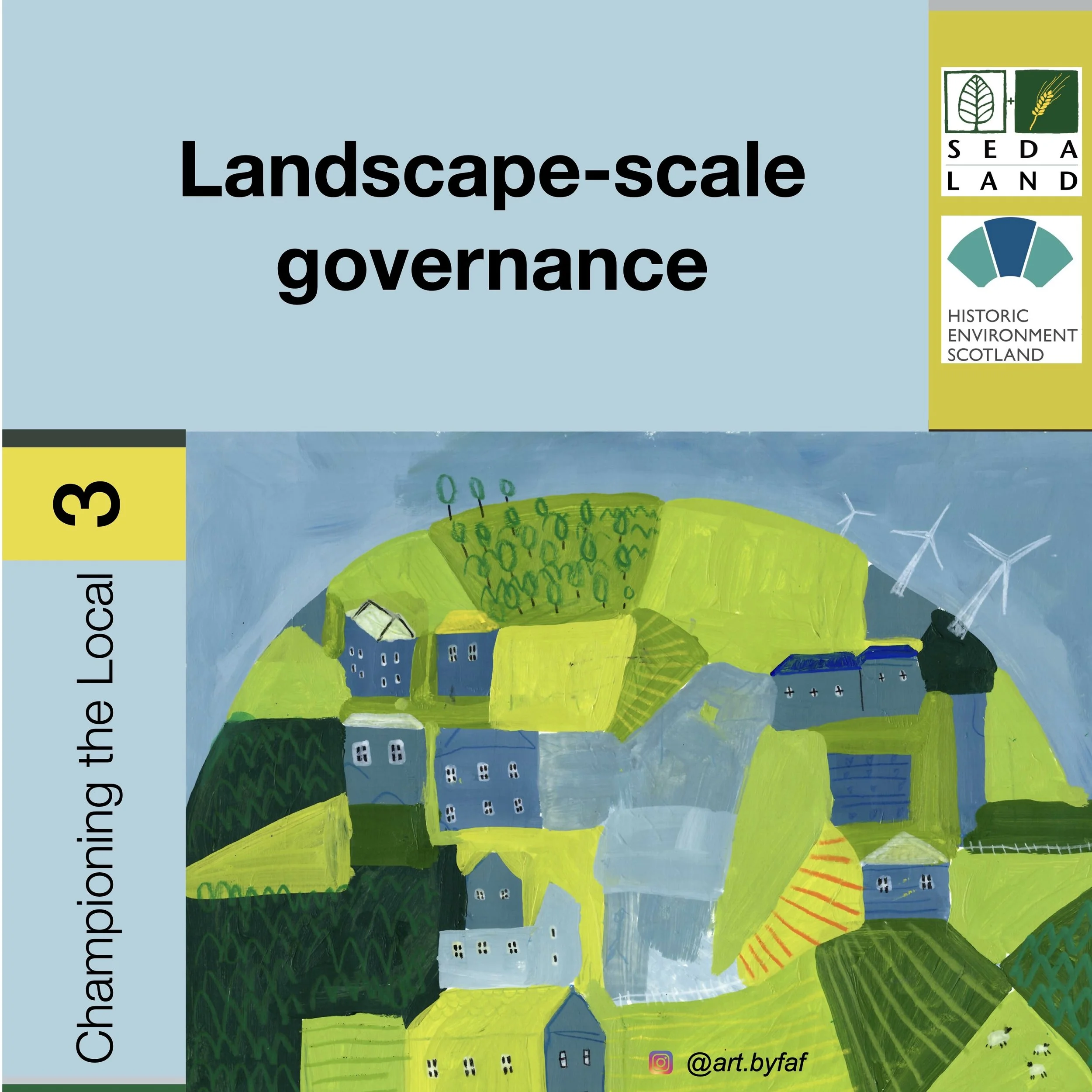
Landscape-scale governance
Mon 21st September 4-6pm
Online – free admission
Landscape-Scale Governance is the third in the CHAMPIONING THE LOCAL series of SEDA Land Conversations.
This conversation will explore when it may be appropriate to scale up the model to regional or national level. Regional Land Use Partnerships (RLUPs) and bioregions are models bordered by natural geographic and landscape boundaries such as mountain ridges and watersheds. Both adopt a natural capital approach to understanding their regional landscapes. This addresses issues in a cross-sectoral way, using a systems approach, rather than simplifying the issues into sectoral silos. This is a challenging ambition, since it means grappling with the complexity, uncertainty and trade-offs inherent in large scale, closely coupled, socio-ecological systems, but policy and land use decisions (such as natural flood protection measures) are often best made at such a scale.
This Conversation will include inspirational models, using these as a springboard for a broader discussion of the subject, addressing obstacles along the way and how to overcome them.
CHAIR:
Lucy Filby, Head of Land & Forestry Transition, South of Scotland Enterprise
Championing the Local
An online series of SEDA Land Conversations (free to attend)
Mon 7th, 14th & 21st of September 2026
There is an emerging consensus about what needs to be done to revive rural Scotland. This series of events will look at how this might be achieved in practice.
The theme will be the role local value chains can play and how these might be facilitated. A place-based model enables rural communities to reap more of the benefits from the land around them including health and wellbeing benefits as well as environmental ones from shorter supply chains.
The passing of the Community Wealth Building Act by the Scottish Government is likely to fuel the growth of local value chains. This world-first piece of legislation commits the Scottish Government to “enable more local communities and people to own, have a stake in, access and benefit from the wealth [Scotland’s] economy generates”, making it mandatory for public bodies to prioritise the reinvestment of locally-generated wealth back into local communities. This event aims to ensure that councils, health boards and other public bodies are given the means to enact the bill.
Artists Contributions

Kirsty Law, singer and songwriter
Kirsty is a Scots folksinger, songmaker and storyteller. Having learnt directly from tradition bearers such as Sheila Stewart she now works in theatre, with artists, dancers, poets, storytellers, sound artists as she explores themes such as social commentary, landscape, hope and snow.
Stuart Paterson, poet
Stuart is an award-winning poet and performer in his native Scots & English. An author of many collections, his poems have been commissioned by BBC2, BBC Radio 4, BBC Ulster, the Scottish Parliament and HMP Barlinnie. In 2017-18 he was BBC Scotland Poet in Residence. In 2020 he was voted ‘Scots Language Writer of the Year’.
Flora Fraser, artist
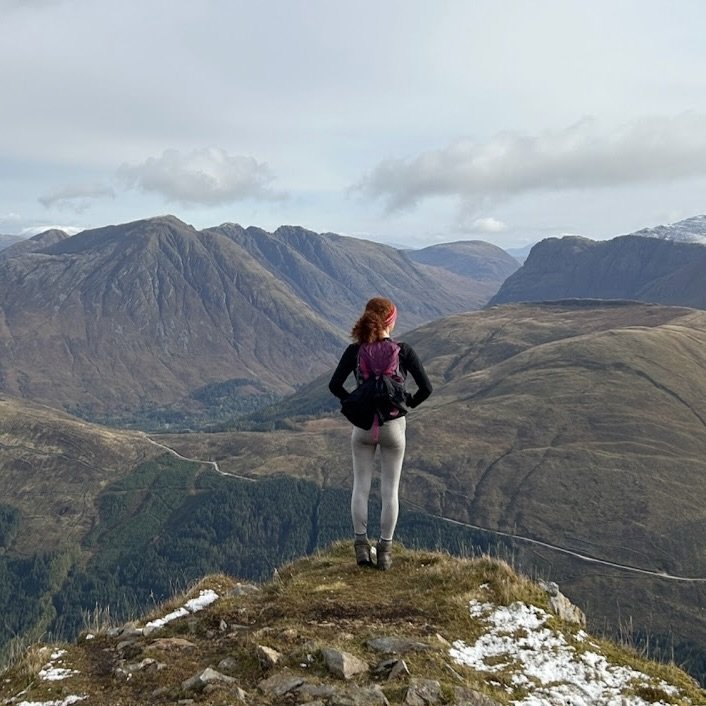
Flora is an award-winning multi-media landscape artist exploring shared experiences in Scotland’s wild places: Art by FAF
Speakers
Andrew Williams
Local Programme Manager, Verture
Andrew is the Local Programme Manager at Verture, the UK’s only charity solely dedicated to climate resilience. Verture work to support a fairer, more climate-ready future for all by bringing together communities, public bodies, businesses and policymakers to address the root causes of climate vulnerability and turn ambition into practical action. Their work focuses on collaboration, place-based approaches and lived experience, combining local knowledge with scientific evidence and policy insight. Andrew is a sustainability professional with experience working in marketing, communications, and project management around environmental and social justice issues, with a particular interest in how community climate action can allow under-represented groups to have their voices heard.
Lizzie Williams
Regional Land Use Partnership (RLUP) manager, NW2045
Lizzie manages the NW2045 Regional Land Use Partnership. She has lived in Coigach since 2009, working on a variety of land and community regeneration initiatives, including hands-on management of nature restoration projects and facilitating cross-sectoral collaboration across the area. Lizzie has supported the NW2045 since 2021, providing communication and coordination skills to sustain the positive intentions of the partners. Raising a young family and supporting unwell parents in a remote community has given Lizzie first hand experience of the issues facing the area.
McNabb Laurie
Manager, D&G Woodlands
McNabb completed a BSc in Environmental Management at Lancaster University before spending 10 years working across the UK in the not-for-profit and corporate sectors. He grew up near Palnackie and in 2013 returned to the region, working initially at Loch Arthur Cafe and with the council, culminating in a role with the Galloway Glens Scheme between 2018-2023. This role involved a broad range of disciplines, from natural environment and heritage through to community engagement. In 2023 McNabb established Dumfries & Galloway Woodlands, leads the organisational development, and aspects of work including the adding of community and wider value to woodland creation schemes in the region. He is a founding trustee of Upper Urr Environment Trust, and secretary of the local community council
Clare Cooper
Co-Founder & Co-Director, Bioregioning Tayside
Clare is Co-Founder and Co-Director of Bioregioning Tayside, where she leads the development of the Framework for Action for the Tay Bioregion (2025–2045) and is helping pioneer new approaches to place-based governance, landscape restoration and regenerative finance. An independent creative producer by background, Clare has held a number of leadership roles bringing together communities, public bodies, land managers and investors to build resilient, regenerative futures, including with Alyth Community Council, Alyth Development Trust and the Rural Perth & Kinross LEADER Local Action Group.

Henry Leveson-Gower
Founder and CEO, Promoting Economic Pluralism
Henry is an ecological economist and policy analyst with 30 years experience working in the public sector, locally, nationally and internationally. He has particular expertise in agricultural and environmental policy and regulation as well as green finance, local currencies and environmental markets. He has always sought to take a pluralist approach to economics since first coming into contact with standard economics in the early 90s following a degree in Philosophy. He set up Promoting Economic Pluralism and The Mint Magazine in 2016, where he is CEO and editor respectively. Henry has also been a Research Fellow at the Centre for Evaluation of Complexity Across the Nexus, is a Fellow of the RSA and a qualified chartered accountant.
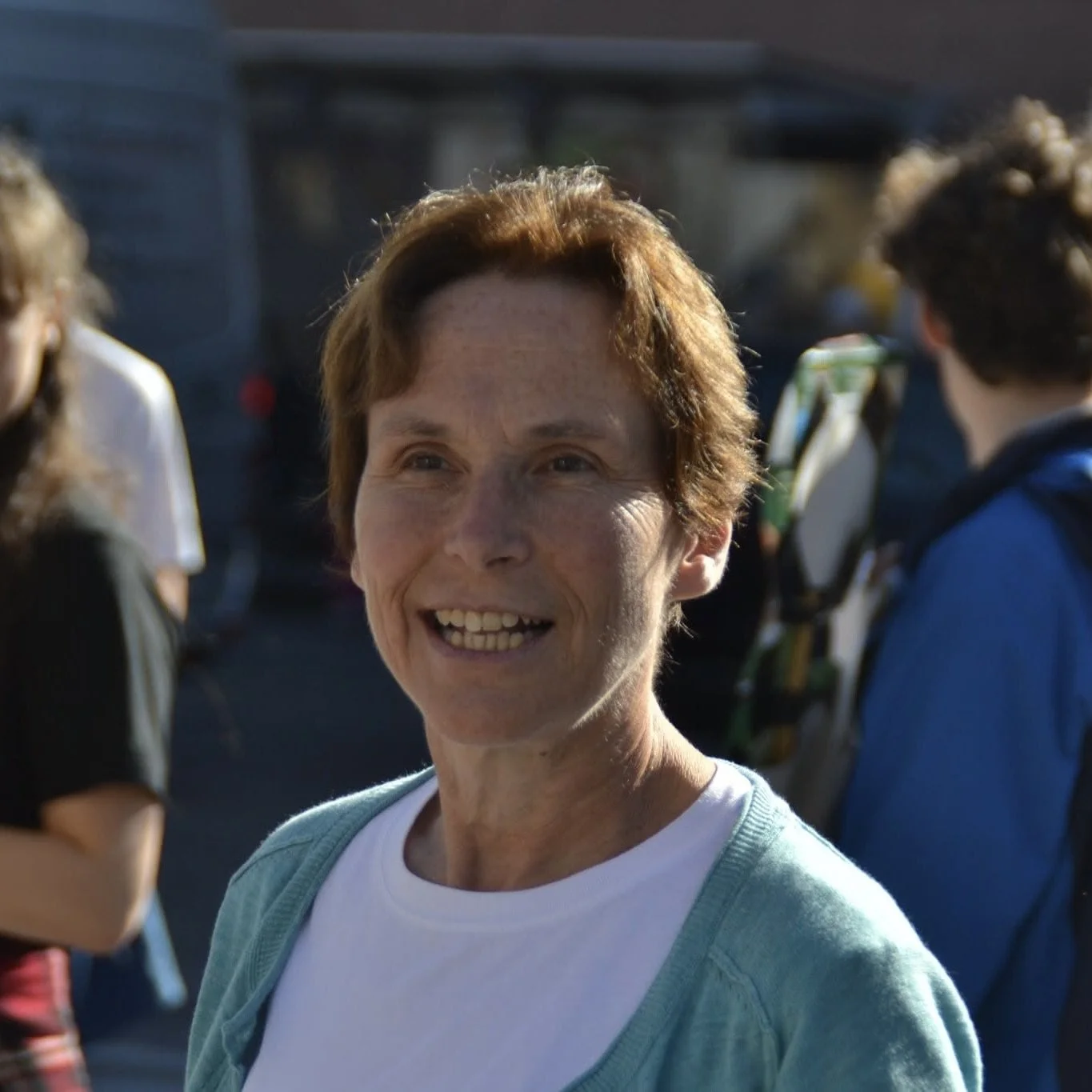
Anne Thomas
Trustee, Highland People’s Power
Anne worked for 38 years as a Speech and Language Therapist mainly with children with additional needs and has a strong interest in preventative health care and wellbeing initiatives and reducing fuel poverty. She lives near North Kessock on the Black Isle, a peninsula with about 10,000 residents in scattered rural households. She is a Trustee of Highland People’s Power, the Convenor of Transition Black Isle, Vice Chair of North Kessock Residents Association, and Treasurer of Highland Cycle Campaign and has delivered projects to cut the environmental impact of food, travel and energy. She helped set up and runs Community Markets, a Community Larder and Black Isle Library of Things which includes bike hire. Anne helped lead a successful campaign to persuade the Highland Council to declare a climate emergency and ecological emergency. She joined the Greens because she felt politicians were not treating the Climate and Nature crisis seriously and has stood at every level.
CHAIR – Lucy Filby
Head of Land & Forestry Transition, South of Scotland Enterprise
Lucy has over 20 yrs experience of building partnership projects to improve environmental outcomes in farming and wider food and drink value chains. Lucy worked at SEPA before joining SOSE in 2022. Lucy believes passionately that the health of our environment cannot be protected or improved without also tackling poverty and inequality. An aspiring regenerative practitioner, she loves working in the spaces between current reality and future vision. She is an advocate for business to be a force for good, growing prosperity and resilience together, within planetary limits.