
Into the Wild
by Ian Fraser
Rob Heasman
One of the most powerful interventions at SEDA Land’s ‘Better Outdoors’ event on 29 April came from Rob Heasman. A teacher in the Annex, a special needs facility at Beeslack High School in Penicuik, Midlothian, Heasman’s stories graphically illustrated how children of all ages can benefit from being allowed to experience the outdoors without too much intervention from adults.
In his talk, Heasman described two of his recent experiences of taking troubled teenagers out of school and into the wild. On both occasions he gave the teenagers walkie-talkies, so they could stay in touch but told them ‘off you go’ which is an unusual thing for a teacher to do.
He described taking one teenager, Ryan, who suffers from severe ADHD, on a trip to the countryside near Vogrie Country Park in Midlothian. When Heasman told Ryan over the walkie-talkie that it was time to come back, the teenager told him that he simply couldn’t. The reason: he was so entranced by the view of the picturesque Currie Lee farm, which Ryan described over his handheld device as being “the most beautiful view I’ve ever seen”.
Heasman also described taking 15-year-old Euan to Seacliff beach in East Lothian. When Euan, who has even worse ADHD than Ryan, normally “never stops talking,” and, who had never before seen the sea, witnessed the waters of the Firth of Forth gently lapping onto the sandy beach, he was utterly transfixed.
“He stopped talking and stayed completely still for 32 minutes,” says Heasman. Euan asked “Is that the sea? Where’s it going? Can anyone come here?” Heasman recounts, adding that “for the rest of that day Euan was a completely different kid”.
L to R - Gail Halvorsen, Louise Licznerski, Davina Bowers, Dr Alexia Barrable, Rob Heasman and Jo Cooke
Other speakers at the event in Augustine United Church on Edinburgh’s George IV Bridge agreed that letting children play and learn relatively freely outdoors brings a wide range of benefits – healthful, psychological, and educational,
Alexia Barrable, a senior lecturer at Queen Margaret University, spelt out the wide range of benefits – physical, mental and emotional – of spending time in a natural setting, adding “there is a minimum dose,” which she said was two hours a week. Barrable is a strong advocate of “dirty play”, which she described as “playful interactions with microbial environments” and pointed to research from Finland which shows that playing and learning outdoors improves children’s immune development.
Two other speakers – Davina Bowers and Louise Licznerski – argued that outdoor learning should be embedded in the curriculum – certainly all the way through primary school and if possible in secondary school too – and in teacher training programmes.
Bowers, who founded the Forest School at Merchiston Castle in 2024, said barriers include that many teachers are uncomfortable or even fearful of teaching outside, and that the curriculum is anachronistic. She believes the former could be rectified by making outdoor learning a core part of the one-year PGDE [Professional Graduate Diploma in Education] and the three or four-year B.Ed. [Bachelor of education]. “At the moment, it feels like it’s being talked about, rather than walked about.”
Bowers said that, unlike Scotland, countries such as Finland and Denmark “have been getting it right for a very long time”. She said inquiry-based learning, which means letting children discover things for themselves in a non-pedagogic way, has masses of potential. “It’s about asking big open-ended questions and seeing where they take you.”
Louise Licznerski, a former retail manager with John Lewis, who moved into teaching before establishing outdoor nurseries in Dunfermline and South Queenferry under the Little Bugs Nursery brand, said: “We all agree that outdoor learning works. It should be embedded in every single school day.” She agreed that changing the way in which teachers are taught is going to be critical.
Matt Robinson, chief executive of Learning Through Landscapes, the UK's leading outdoor learning and play charity, intervened from the floor to say that opening the eyes of mid-career teachers to the merits of outdoor learning and teaching them about, is more important than targeting young teachers. “They’re the ones with the ability to change the world.”
Barrable said that one of the biggest drivers from the teachers’ perspective is that they themselves need to feel connected to nature. And unfortunately, due to what we call the extinction of experience, more and more of us are growing up indoors and new generations are lacking that sense of wonder… They lack that experience, so we need to teach them that from the beginning. We need the ‘de-extinction of experience’.”
Heasman declared that the benefits of the outdoors are “almost immeasurable,” but that failure to roll it out faster across the education system is partly due to “people’s perception of risk.” with the idea of taking children to the beach or even pond-dipping is for some reason perceived as dangerous. Robinson revealed that, on his son’s first day in senior school, he received a call from the school to say, “Your son's in trouble…. He’s climbed a tree.” The sheer ridiculousness of the call provoked a laugh in the audience.
Robinson also revealed that 83% of school grounds in Scotland currently comprise “flat tarmac and mown grass”. He said this too needs to change as “spaces are just as important as staff training.” Edinburgh-based landscape architect, Tim Wilson, chair of Landscape Institute Scotland (LIS), pointed out that we’re at a pivotal moment in terms of how external spaces at schools are laid out, as the Scottish Government is currently updating its school premises regulations, with a consultation that ended on 31 March. Wilson said this represents “a huge opportunity”.
Henry Mathias, who is on the board of the International Play Association and was previously with the Care Inspectorate, said there is a “huge opportunity” to spread outdoor learning right across the curriculum. He asked, given that up to 43% of children going into Scottish primary school are today being labelled as having additional support needs “at what stage do we say we've got a problem with the system rather than a problem with our children?”
He said parents are voting with their feet, with around one-third home-schooling their children instead of sending them to primary school for P1, as soon as the government permitted this. “Even the Conservatives are looking positively at outdoor play and I think we’ve got a real opportunity on our hands now.”
Licznerski “It is time that local governments started drawing on the expertise they already have instead of trying to reinvent the wheel. The skills and support already exist. We can have policies and documents and training courses.” As a first port of call she would direct civil servants and policymakers to the body she founded, Scottish Outdoor Learning Association.
The session was enlivened by a couple of artistic interludes – a newly written poem, ‘The Question in the Leaves,’ composed and read by Sophie Cooke, and a song from Pathhead based singer Sophie Bancroft called ‘Comfort’ – and was ably chaired by SEDA Land chair and SEDA director Gail Halvorsen.
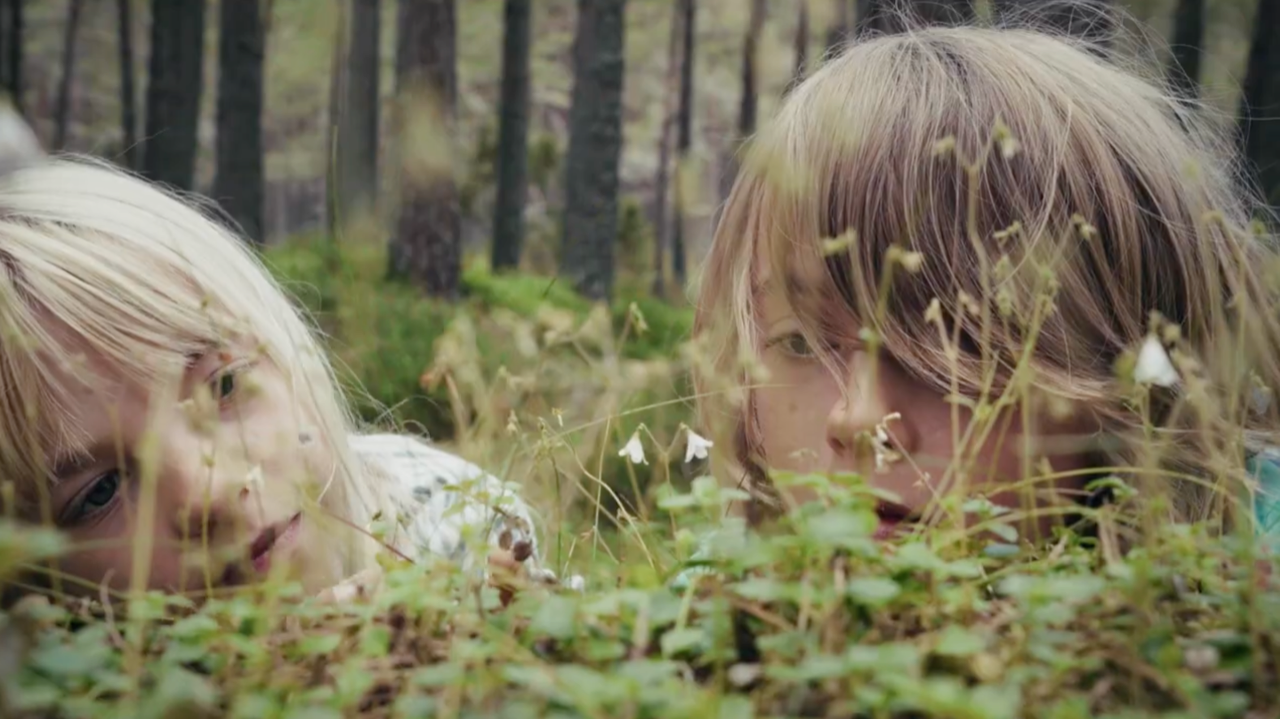
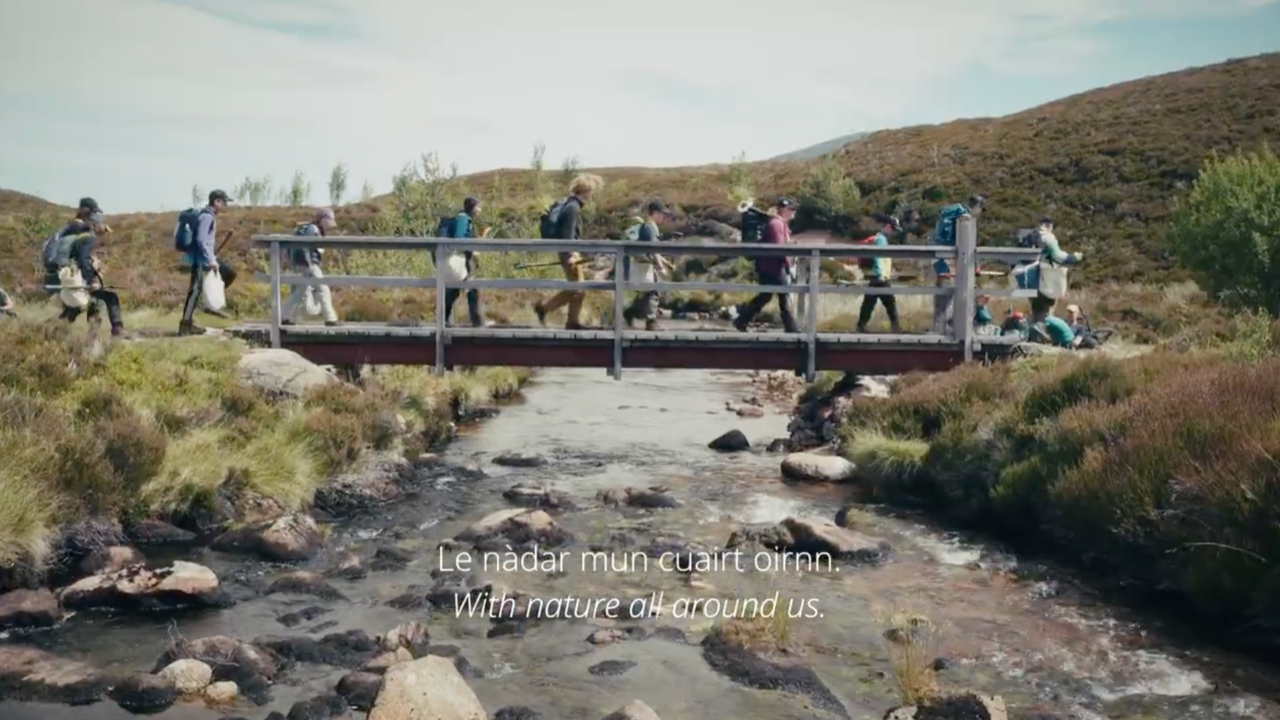
The opening film and closing film at the Better Together event was, appropriately enough, “We are Here”. This beautifully-shot film by Robbie Synge is well worth watching properly. Funded by Cairngorm Connect, it features a group of Gaelic-speaking children playing, dancing, running, skipping, tree-climbing, tree-planting, watching wildlife and generally having fun in the heather moorland and birch and pine woods of the Cairngorm national park – as they sing about “making change happen”. To me the film brilliantly conveyed the euphoria one can feel when roaming, and playing, free in a comparative wilderness.